

Mohammad Al Mamur
Introduction – The Nation That Fears Its Thinkers
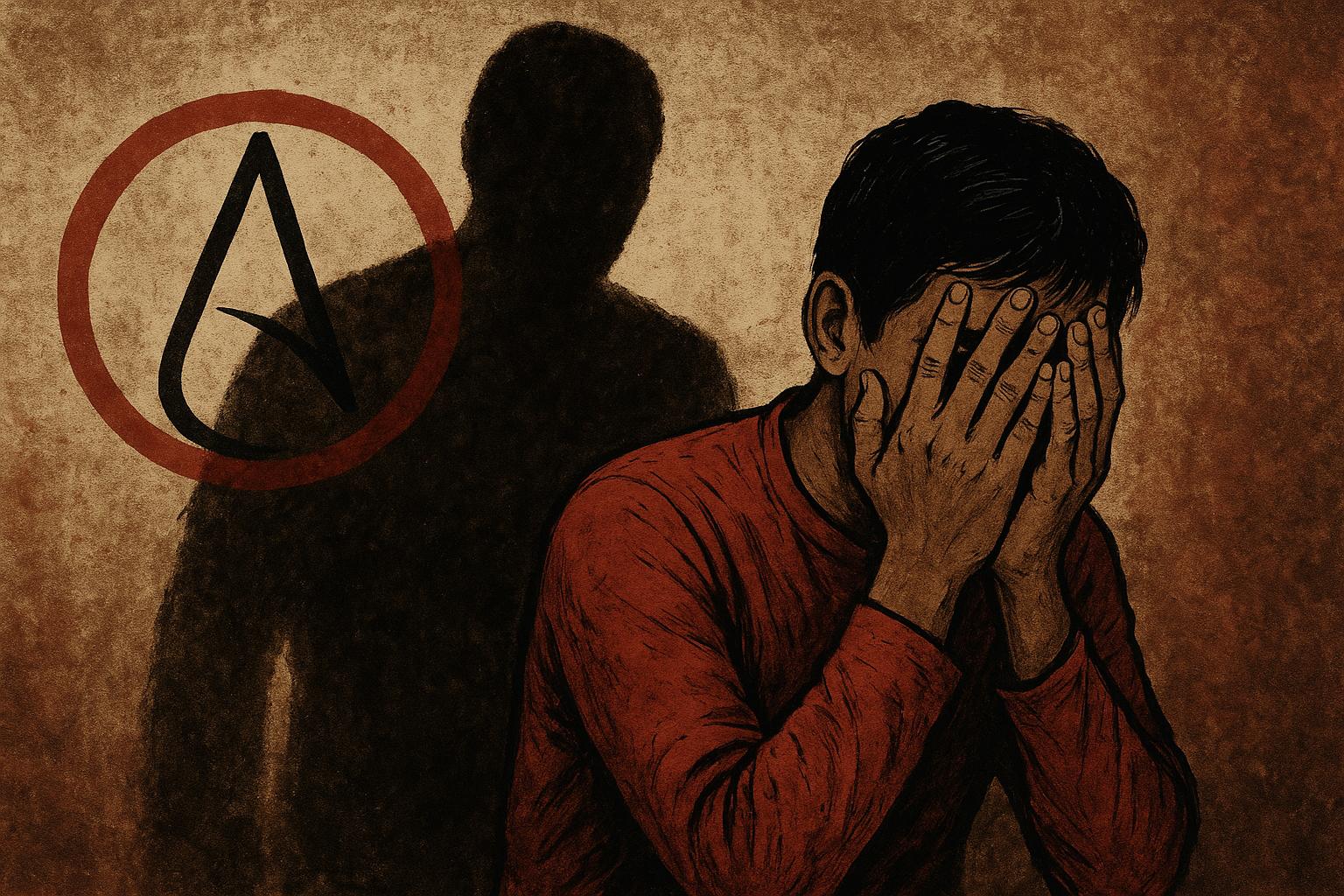
Bangladesh proclaims liberty as its birthright, yet thought itself has become contraband. In a land that once fought to free the human voice from tyranny, questioning God is now considered a crime greater than murder. The atheist in Bangladesh does not simply dissent; he survives. To doubt aloud is to court death; to write is to risk erasure.
Behind the chants of patriotism lies a quieter war a war between faith and reason, between the right to think and the demand to kneel. The atheist is not an enemy of the people but the conscience of the republic, and that is precisely why the state fears him most.
A Constitution in Conflict
Bangladesh’s Constitution promises “freedom of thought, conscience and religion,” yet proclaims Islam as the state religion. These two clauses live in permanent contradiction, like locked swords inside a single scabbard. The promise of liberty is nullified the moment it collides with piety.
This structural hypocrisy has enabled a culture where disbelief is treated as sedition. It provides legal cover for persecution, allowing the government to pledge pluralism to the United Nations while permitting clerics to demand blood in the streets. The result is not a democracy of belief but a theocracy of fear.
The Digital Security Act – Faith by Surveillance
In 2018, the government replaced the colonial-era Information and Communication Technology Act with the so-called Digital Security Act (DSA). It was marketed as a tool against cybercrime; in practice, it became a blasphemy code.
Under its vague language—“hurting religious sentiment,” “spreading confusion,” “tarnishing the image of the state” atheists, writers, and satirists have been imprisoned without trial. Police need no warrant; arrest precedes investigation. A Facebook post questioning clerical hypocrisy can result in months of solitary confinement.
The DSA has converted Bangladesh’s internet into a digital mosque where everyone is compelled to pray or perish.
The Killings That Shook a Generation
Between 2013 and 2016, Bangladesh witnessed a wave of targeted assassinations that silenced the country’s brightest secular voices.
- Ahmed Rajib Haider (Thaba Baba) – hacked to death outside his home for advocating secular education.
- Avijit Roy, founder of Mukto-Mona (Free Mind), murdered at the Dhaka book fair while police looked on.
- Niloy Neel, killed in his apartment after being tracked through social media.
- Washiqur Rahman, beheaded in daylight for writing satire.
Each name marks a tombstone on the nation’s conscience. None of the principal architects of these murders has been brought fully to justice. Trials stall; witnesses vanish; killers are quietly released. Impunity has become the new theology.
A Machinery of Hypocrisy
Successive governments have denounced the killings while blaming the victims for “provoking religious sentiment.” The same state that arrests bloggers for criticism of Islam hosts conferences on “interfaith harmony.” Officials light candles for peace while clerics light torches for vengeance—and both sides sit on the same stage.
By refusing to confront the ideological roots of extremism, the government perpetuates it. The fear of alienating conservative voters outweighs the duty to defend constitutional rights. Thus, cowardice becomes policy and appeasement masquerades as tolerance.
The Clerical Industry of Fear
Islamic extremism in Bangladesh is not spontaneous; it is organised, financed, and politically leveraged. Madrasa networks, many subsidised by foreign donors, serve as ideological foundries producing preachers of hate. Friday sermons denounce secularism as an imported disease, and those who question scripture are labelled agents of the West.
Groups such as Hefazat-e-Islam command millions, issuing fatwas against women’s rights, LGBTQ+ existence, and secular thought. Politicians, instead of countering them, invite their endorsement during elections. Every handshake with a fundamentalist cleric deepens the grave of reason.
The Social Consequence Ostracism as Execution
Persecution of atheists is not confined to courtrooms or assassinations. It infiltrates daily life. A teacher dismissed for refusing to wear religious attire, a student expelled for questioning miracles, a son disowned for admitting disbelief—each story reflects an unspoken apartheid of thought.
To survive, many atheists masquerade as believers. They attend prayers they do not believe in, fast in Ramadan to avoid suspicion, whisper skepticism behind locked doors. This forced duality corrodes the soul; it turns honesty itself into a luxury.
Exile and the Geography of Fear
Those who escape abroad carry their exile like an open wound. They find safety but not belonging. In London, Berlin, Toronto, or Stockholm, Bangladeshi atheists form small circles—publishing, speaking, remembering the dead. Yet even in exile they receive threats from extremists operating across borders.
Exile ensures survival but not freedom from fear. The death threats cross oceans; the nightmares follow on every screen. The homeland that once shaped their language now rejects their existence.
International Hypocrisy and Western Silence
Western governments that champion freedom of expression remain largely silent about the persecution of atheists in Bangladesh. Strategic partnerships, counter-terrorism cooperation, and trade interests mute their outrage. Diplomats attend seminars on human rights but avoid the word “atheist.”
This silence emboldens the persecutors. Every unspoken word in London echoes as a gunshot in Dhaka. When the world treats disbelief as a negotiable right, the murderer’s knife gleams brighter.
The Psychological War
Living under constant threat rewires the human mind. Atheists in Bangladesh learn to censor their laughter, to lower their voice when speaking of science, to glance over their shoulder before every sentence. The trauma is generational: children inherit the fear their parents never dared to name.
Psychologists report severe anxiety, insomnia, and post-traumatic stress among survivors of attacks. The state offers no counselling, no protection—only silence. In Bangladesh, therapy begins with exile.
Law, Reason, and Redemption
No faith requires the death of doubt. The Quran itself begins with a command to “read”—yet its followers in Bangladesh kill those who read too deeply. The judiciary must reclaim its moral spine. The Digital Security Act and Section 295A must be repealed or reformed to align with international standards of free expression.
Parliament must criminalise incitement to violence, not criticism of religion. Police training must include protection of vulnerable voices. The education system must teach philosophy and science as antidotes to dogma. Without these reforms, Bangladesh will remain a nation at war with its own mind.
The Moral Verdict
Atheists are not seeking privilege; they are demanding parity. They ask only the right to exist without disguise, to think without fear, and to die of age, not ideology. Protecting them is not an act of Westernisation—it is the fulfilment of Bangladesh’s own constitutional promise and the moral legacy of 1971.
The nation’s liberation was not a divine decree; it was a human struggle for dignity. To silence atheists is to betray that struggle. The true measure of a country’s faith is not in its prayers but in its mercy toward those who do not pray.
Conclusion Freedom as the Final Prayer
Bangladesh stands at a threshold between enlightenment and oblivion. It can continue to appease the clerics and descend into medieval darkness, or it can reclaim the courage of its founding ideals. Protecting free thinkers will not destroy religion; it will save the nation’s soul from fanaticism.
Freedom of thought is not a Western luxury—it is the essence of humanity. When a country kills for belief, it kills itself. The atheist’s voice, fragile yet fearless, is the last remaining echo of reason in a land drowning in its own faith. To defend that voice is to defend the future.