

Abu Rahat Murshed Kabir, UK
Bangladesh today stands at a dangerous crossroads. Once founded on secular ideals and the promise of pluralism, the country is increasingly defined by fear, religious intimidation, and the shrinking space for those who do not conform to conservative religious norms. Among the most vulnerable are LGBTQ+ people, atheists, secular thinkers, and human rights defenders. Their existence has become a political act. Their identities are treated as threats. Their safety is negotiable.
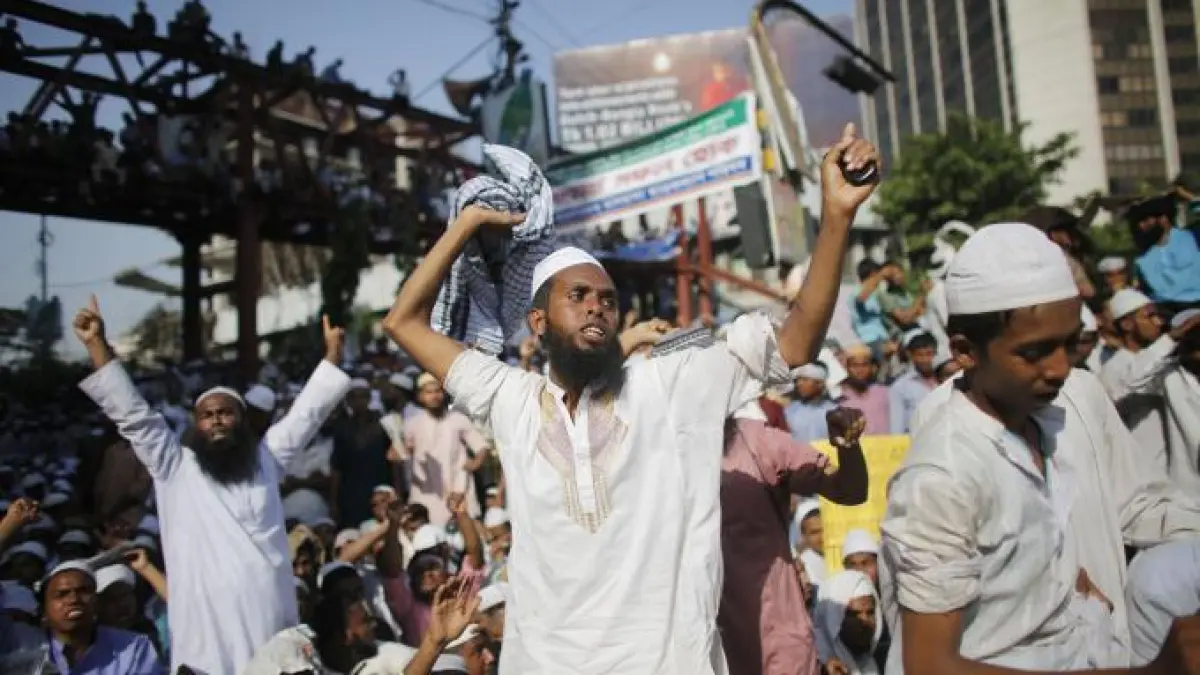
The rise of Islamic extremism in recent years, particularly in the fragile political environment following the 2024 upheaval and the interim Yunus administration, has deepened long-standing structural failures. Extremist networks, emboldened by political uncertainty and weak enforcement of the rule of law, have found renewed space to intimidate, attack, and silence. The consequences are visible in the daily lives of queer people, in the exile of atheist bloggers, and in the normalization of mob violence justified in the name of religion.
This is not simply a human rights issue. It is a crisis of the Bangladeshi state itself.
The LGBTQ+ Community: Criminalized, Marginalized, and Exposed
Same-sex relationships remain criminalized in Bangladesh under Section 377 of the Penal Code, a colonial-era law that continues to be used as a weapon of fear, even if prosecutions are rare. The existence of this law alone sends a clear message: LGBTQ+ people are not equal citizens. They live under the constant threat of legal harassment, blackmail, and social violence.
For queer Bangladeshis, daily life involves careful calculation. Who can be trusted. What can be said. Which spaces are safe. Visibility is dangerous. Silence is a survival strategy.
The 2016 murders of Xulhaz Mannan and Mahbub Rabbi Tonoy, prominent LGBTQ+ activists and organizers of Bangladesh’s first queer magazine Roopbaan, sent a chilling message to the entire community. They were killed in their own apartment by Islamist extremists. That attack was not just a crime. It was a declaration: queer existence itself would be punished.
International organizations including Amnesty International and Human Rights Watch have repeatedly warned that Bangladesh has failed to protect LGBTQ+ people and has allowed a climate of impunity to flourish. The state response has often focused on “sensitivity” and “social values” rather than on enforcing fundamental rights. This moral cowardice leaves LGBTQ+ citizens exposed.
Recent activism by transgender and queer figures, including hunger strikes and public protests for recognition and legal reform, has shown extraordinary courage. Yet these acts of visibility also carry enormous risk. Extremist groups, emboldened by political shifts and the resurgence of religious hardliners, have targeted LGBTQ+ activism as “Western corruption” or “anti-Islamic propaganda.”
This framing is deliberate. It strips LGBTQ+ people of their Bangladeshi identity and portrays them as outsiders. It makes violence seem justified.
Atheism and Secularism: Living Under Threat of Death
Atheists in Bangladesh face a uniquely lethal form of persecution. The brutal murders of secular bloggers between 2013 and 2016 remain one of the darkest chapters in the country’s recent history. Writers were hacked to death for expressing non-religious views or criticizing religious extremism. Many had warned authorities about threats. Protection was minimal or nonexistent.
Even after the peak of killings, the threat never disappeared. Instead, it went underground. Online death lists. Police harassment. Criminal cases for “hurting religious sentiments.” Forced exile. Families targeted. The goal is not only to silence individuals, but to erase a way of thinking.
Prominent atheist and secular activists such as Asif Mohiuddin and Asad Noor have been forced into exile after assassination attempts, imprisonment, and relentless threats. Their stories are not isolated. They are part of a broader pattern: disbelief is treated as provocation, and rationalism as treason.
International law is clear. Freedom of thought, conscience, and religion includes the right not to believe. In practice, Bangladesh treats atheism as a liability. The state has repeatedly failed to make a clear, principled stand that non-belief is protected.
This failure sends a message to extremists: you may not always be officially endorsed, but you will rarely be meaningfully opposed.
The Rise of Islamic Extremism: Political Space and Street Power
Islamist groups in Bangladesh have long existed, but their influence expands when political institutions weaken. The period following the 2024 political upheaval created exactly such a vacuum. Human rights reporting in 2025 has documented increased mob violence, attacks on minorities, and the growing visibility of hardline Islamist movements.
Groups with histories of intolerance and extremist rhetoric have regained public space. Some have openly mobilized against perceived enemies of Islam, including religious minorities, secularists, and LGBTQ+ people. Public demonstrations, mosque-based mobilization, and social media campaigns have normalized extremist narratives.
Human Rights Watch has reported on new crackdowns and politically motivated uses of anti-terror and public order laws, alongside failures to control mobs and protect vulnerable groups. These developments create a paradoxical environment: the state uses heavy force against political opponents, while allowing extremist street power to grow.
This selective enforcement is deadly. It teaches extremists that their violence will be tolerated, while critics of religious extremism are criminalized.
The result is a politics of fear. Fear of being named. Fear of being accused. Fear of being attacked by a crowd. Fear of being arrested for speech.
Intersection of Vulnerabilities: When Identity Multiplies Risk
For people who are both LGBTQ+ and atheist, or queer and politically outspoken, the danger is multiplied. Each identity becomes another reason to be targeted. Extremists do not see separate categories. They see enemies.
A queer atheist is not just immoral in extremist ideology. They are a symbol of everything hardliners claim to oppose: modernity, secularism, individual freedom. This makes them high-value targets for intimidation.
The state has failed to recognize this intersectional vulnerability. Protection mechanisms are weak. Reporting threats often leads nowhere. In some cases, victims themselves are questioned, shamed, or warned to change their behavior.
This is not protection. It is victim-blaming.
Mob Justice and Blasphemy Culture
One of the most alarming trends is the normalization of mob violence in the name of religion. Accusations of blasphemy, often false or exaggerated, have led to lynchings, arson, and mass attacks. Recent cases involving religious minorities demonstrate how quickly crowds can be mobilized and how little restraint is exercised by authorities.
This culture of mob justice is catastrophic for atheists and LGBTQ+ people. A single rumor can be enough to trigger violence. There is no due process. No presumption of innocence. No meaningful protection.
Once this culture takes root, no one is safe.
The Yunus Interim Period: A Test of Moral Leadership
The interim administration under Muhammad Yunus came to power with promises of reform and stabilization. Yet for vulnerable minorities, the period has been marked by uncertainty and rising danger. Human rights organizations have raised concerns about political reprisals, mob violence, and failures to protect minorities.
Whether by weakness, calculation, or misjudgment, the administration has not drawn a firm line against religious extremism. That silence is interpreted as consent.
History is unforgiving on this point. When governments fail to confront extremism early, the cost later is far higher. Extremists do not stop with one group. They expand.
Why This Is a National Crisis, Not a Minority Issue
The persecution of LGBTQ+ people and atheists is not a fringe issue. It is a warning sign of democratic decay. When the state cannot protect those with unpopular identities or beliefs, the rule of law itself is weakened.
Today it is queer people and secular bloggers. Tomorrow it may be journalists, trade unionists, women’s rights activists, or political opponents. Extremism does not respect boundaries.
A state that allows religion to be weaponized against citizens is no longer neutral. It becomes a participant in discrimination, even if indirectly.
The Way Forward: Courage, Not Compromise
Bangladesh does not lack laws. It lacks political courage. It lacks consistent enforcement of rights. It lacks a clear message that citizenship is not conditional on belief, sexuality, or conformity.
Real reform would require:
- Repealing Section 377 and decriminalizing same-sex relationships
- Explicit legal protection for freedom of belief and non-belief
- Firm action against extremist groups and mob violence
- Accountability for police failures and complicity
- Public leadership that defends pluralism, even when it is unpopular
None of this is easy. But the alternative is worse.
Conclusion: A Country Cannot Be Free If Its People Are Not
A Bangladesh that forces its LGBTQ+ citizens into hiding, that drives atheists into exile, and that allows extremists to dictate public morality is not a free country. It is a country ruled by fear.
Pluralism is not weakness. It is strength. Secularism is not hostility to religion. It is the only framework that allows people of all beliefs and none to live together without coercion.
The treatment of LGBTQ+ people and atheists is not a side issue. It is a measure of Bangladesh’s democratic soul.
Right now, that soul is under attack.